
As part of our continued deep dive into the 2026 Corporate AI Outlook Study, we are examining how organizations are funding AI initiatives as adoption matures. Budget decisions often reveal more about confidence and expectations than strategy statements alone.
In this post, we focus on how AI leaders expect their budgets to change in 2026 and what those expectations suggest about how AI is being positioned within broader technology and business planning.
Most organizations expect AI budgets to increase
Survey results show that a strong majority of organizations expect their AI budgets to grow in 2026. Most anticipate modest or incremental increases, while a smaller but meaningful group expects more substantial growth. Only a limited number of respondents foresee flat or declining AI spending.
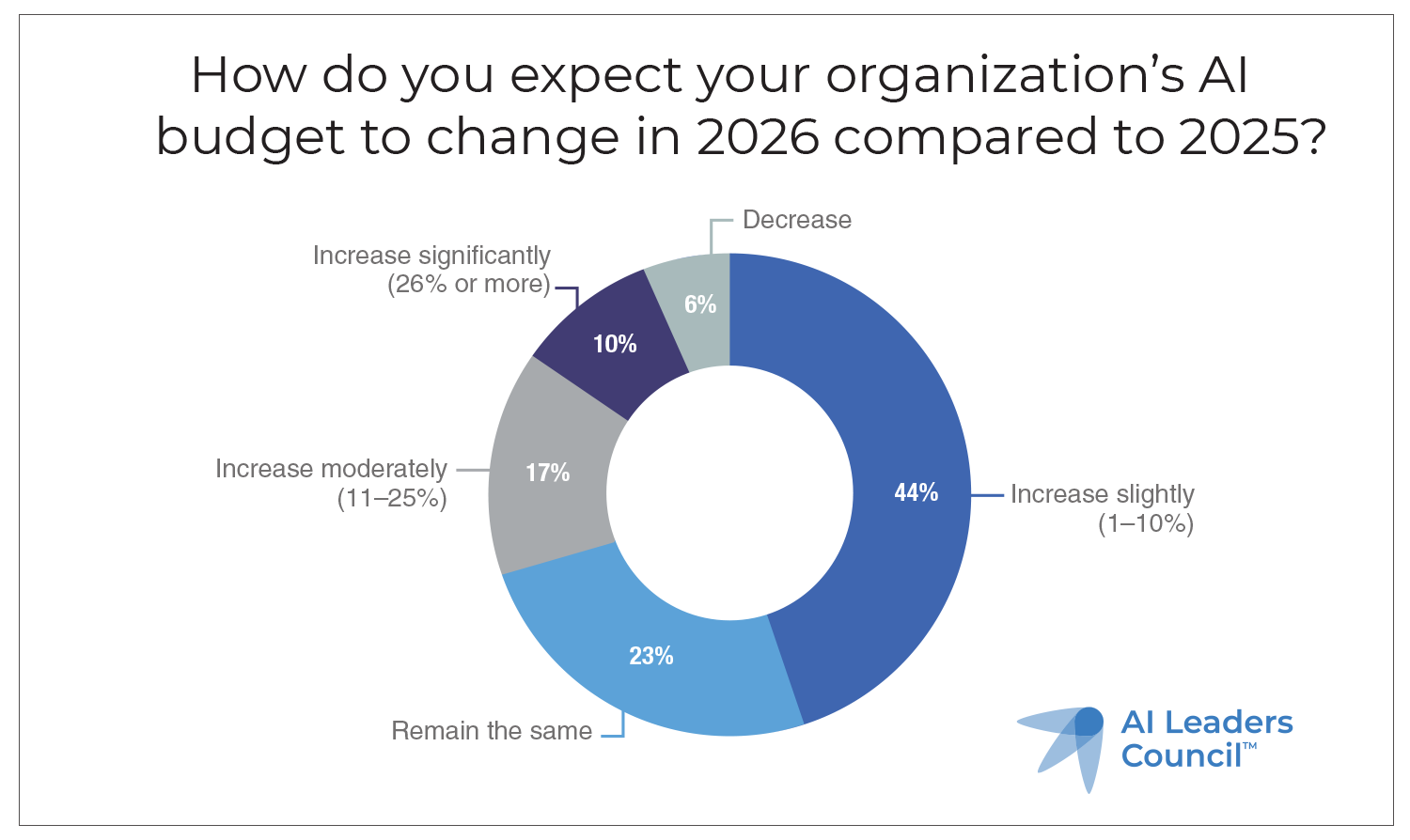
This pattern signals sustained commitment rather than aggressive expansion. AI is no longer treated as a speculative investment, but neither is it being funded without restraint.
- Decrease: 6%
- Remain the same: 23%
- Increase slightly (1–10%): 44%
- Increase moderately (11–25%): 17%
- Increase significantly (26% or more): 10%
Incremental growth reflects maturing expectations
The prevalence of moderate budget increases suggests that AI investment is becoming normalized within technology budgets. Leaders appear to be moving away from one-time experimentation funding toward ongoing operational investment.
This shift brings new expectations. As AI becomes part of standard planning cycles, it is increasingly evaluated alongside other technology initiatives. Leaders are expected to justify spend through outcomes, efficiency gains, and alignment with business priorities.
AI budget discipline raises the bar for impact
Incremental funding places greater emphasis on execution. Organizations with limited budget growth must make careful decisions about which initiatives to support, which use cases to scale, and which experiments to pause.
This environment rewards clarity. AI leaders who can articulate how initiatives contribute to productivity, cost control, or risk reduction are better positioned to secure continued investment. Those who rely on exploratory narratives may face increasing scrutiny.
What budget trends mean for AI leaders
Budget expectations suggest that AI is transitioning from discretionary innovation to core capability. With that transition comes accountability. Leaders must balance ambition with discipline, ensuring that investments are focused, measurable, and aligned with organizational readiness.
Organizations that treat AI funding as an operating expense tied to performance, rather than as a series of isolated projects, are more likely to sustain momentum over time.
See how AI budgets align with adoption and outcomes
The 2026 Corporate AI Outlook Study from the AI Leaders Council connects AI budget expectations to adoption levels, investment priorities, and business objectives across organizations. Download the full report to understand how AI leaders are planning, funding, and justifying AI investment in 2026.