
As part of our ongoing deep dive into the 2026 Corporate AI Outlook Study, we are examining individual survey questions to better understand how AI is being applied inside real organizations. Rather than focusing on tools or announcements, this series looks at the practical decisions leaders are making as they move from experimentation toward broader adoption.
In this post, we focus on how organizations are currently developing and implementing AI, and what those choices suggest about priorities, constraints, and long-term readiness.
AI progress is driven by access and speed
One of the clearest signals from the study is that most organizations are advancing AI through readily available cloud platforms and external vendors. Fully in-house development remains less common, and acquisitions aimed specifically at accelerating AI capability are rare.
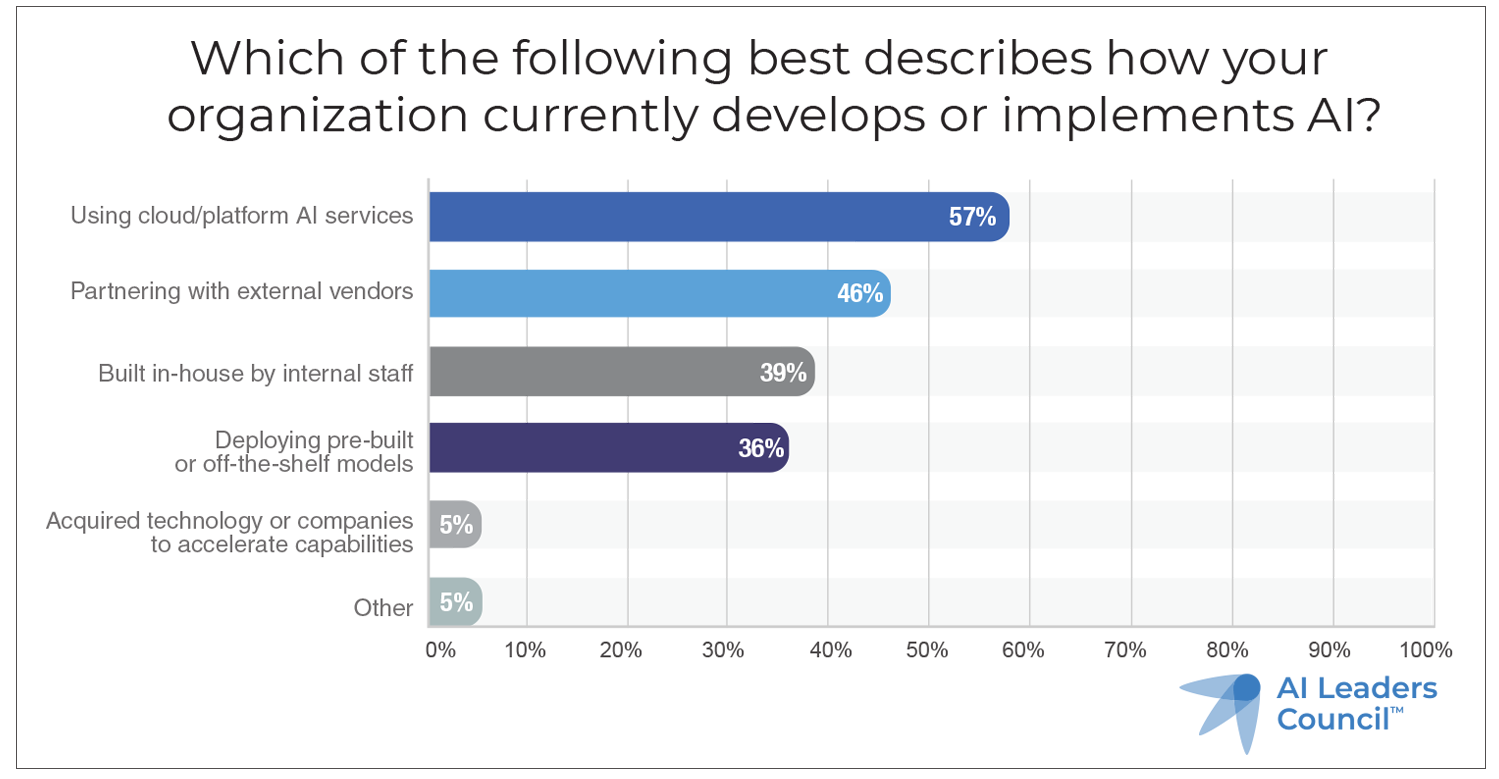
This pattern reflects a strong preference for speed and accessibility. Leaders are choosing options that allow teams to move quickly, test ideas, and deliver early value without waiting to build deep internal infrastructure. In many cases, this approach lowers barriers to entry and accelerates learning across the organization.
- Using cloud/platform AI services: 57%
- Partnering with external vendors: 46%
- Built in-house by internal staff: 39%
- Deploying pre-built or off-the-shelf models: 36%
- Acquired technology or companies to accelerate capabilities: 5%
- Other: 5%
Internal capability is still catching up
While external platforms and vendors play a central role, internal teams are typically supporting implementation rather than leading it end to end. This does not indicate a lack of interest in building internal capability. Instead, it reflects the reality that AI skills are scarce, expensive, and difficult to scale quickly.
As AI initiatives expand, this imbalance introduces new questions. Leaders must consider how much capability needs to reside internally, how knowledge is transferred from vendors to staff, and how oversight is maintained as reliance on third-party solutions grows.
What this means for AI leaders
The results suggest that most organizations are not choosing an operating model so much as responding to immediate needs. Decisions are often driven by what can be deployed quickly rather than by long-term architectural design.
For AI leaders, the challenge is managing dependency without slowing progress. This includes setting clear expectations with vendors, ensuring transparency into how systems work, and building internal understanding over time. Without deliberate attention, organizations risk moving quickly without developing the skills and governance needed to sustain AI at scale.
“The key for anybody who’s going to start doing anything with AI is you need to start with the problem first. Don’t lean into an app or a software that you hear you need.”
This perspective reinforces what the data shows. AI implementation is most effective when it begins with a clearly defined business problem and uses available tools as enablers rather than drivers. Speed matters, but direction matters more.
Preparing for the next phase of AI implementation
As AI adoption matures, implementation decisions will increasingly shape long-term outcomes. Organizations that treat early deployments as learning opportunities, while intentionally building internal capability and oversight, are better positioned to scale responsibly.
The 2026 Corporate AI Outlook Study explores how implementation approaches connect to adoption challenges, investment priorities, and risk concerns across organizations. Download the full report to see how AI leaders are balancing speed, control, and sustainability heading into 2026.