As AI agents become more capable, organizations are confronting the operational questions that follow widespread adoption. This week’s developments focus on employee trust, workflow design, cybersecurity, and the practical work required to move AI from pilots into production. Companies are also discovering that AI can improve productivity and quality, but those gains depend heavily on management practices, governance, and how effectively organizations redesign work around the technology.
1. Employees Need to Trust AI Agents Before Companies Can Scale Them
Organizations may be eager to give AI agents more responsibility, but employees are not always comfortable granting them the access and autonomy required to complete meaningful work. New research highlighted by Harvard Business Review finds that trust is becoming a significant obstacle to agent adoption, particularly when employees are uncertain about what an agent can do, how reliable it is, or what will happen when something goes wrong.
For businesses, the issue becomes increasingly important as agents move beyond drafting and research into workflows that involve company data, applications, and actions. Clearly defining an agent’s capabilities and limitations can help employees understand when to rely on AI and when human involvement remains necessary.
Read the full story on Harvard Business Review
2. AI Is Moving Faster Than Companies Can Govern It
Organizations are learning that one of the hardest parts of scaling AI is understanding how their own work actually gets done. CIO reports that companies have experienced incidents ranging from AI agents exposing sensitive information to systems deleting production data and disrupting business processes. These problems often arise when organizations automate workflows without fully understanding the processes, dependencies, and controls involved.
The lesson for AI leaders is practical. Before assigning an agent responsibility for finance, IT, customer service, or another workflow, companies need to map the process, identify exceptions, establish permissions, and determine where human approval should be required.
3. AI Agents Are Becoming Cybersecurity Targets Themselves
Companies have spent considerable time preparing for attackers who use AI, but a new cybersecurity concern is emerging: attackers targeting the AI agents operating inside businesses. Bugcrowd CEO Dave Gerry told Axios that organizations should begin treating agents as both potential security risks and potential victims of cyberattacks.
The concern is particularly relevant because enterprise agents can have access to email, files, databases, applications, and other sensitive systems. Security teams may need to manage agent identities much like employee identities, including limiting permissions, monitoring activity, and revoking access when unusual behavior occurs.
4. AI Agents Are Creating a New Identity and Data Security Problem
As businesses deploy more AI agents, security teams are finding that existing identity systems were largely designed for human employees. TechCrunch reports that enterprises are beginning to encounter situations where agents and AI tools can access sensitive information without going through the same controls applied to workers. In one example, approximately 85,000 files at a public company were found to be accessible to AI tools and agents.
The development points toward a practical new responsibility for security leaders: understanding not only which employees have access to sensitive information, but also which AI systems do. Organizations may increasingly need inventories of agents, their permissions, the data they can reach, and the actions they are authorized to perform.
Read the full story on TechCrunch
5. AI Is Improving Productivity, but Management Practices Are Falling Behind
New research from Eagle Hill Consulting found that organizations are already seeing practical benefits from AI. Among senior business decision-makers surveyed, 66% reported improved employee productivity, 59% reported better operational efficiency, 55% saw improvements in work quality, and 53% reported improvements in customer experience. AI use was also widespread across business operations, analytics, and knowledge work.
However, the research found that leadership practices, workforce strategies, and organizational culture are not changing at the same pace. That creates an important challenge for AI leaders: organizations may have capable technology and useful applications while still relying on management structures and workflows designed for a pre-AI workplace.
Read the full story on Eagle Hill Consulting
6. AI Certifications to Advance Your Career
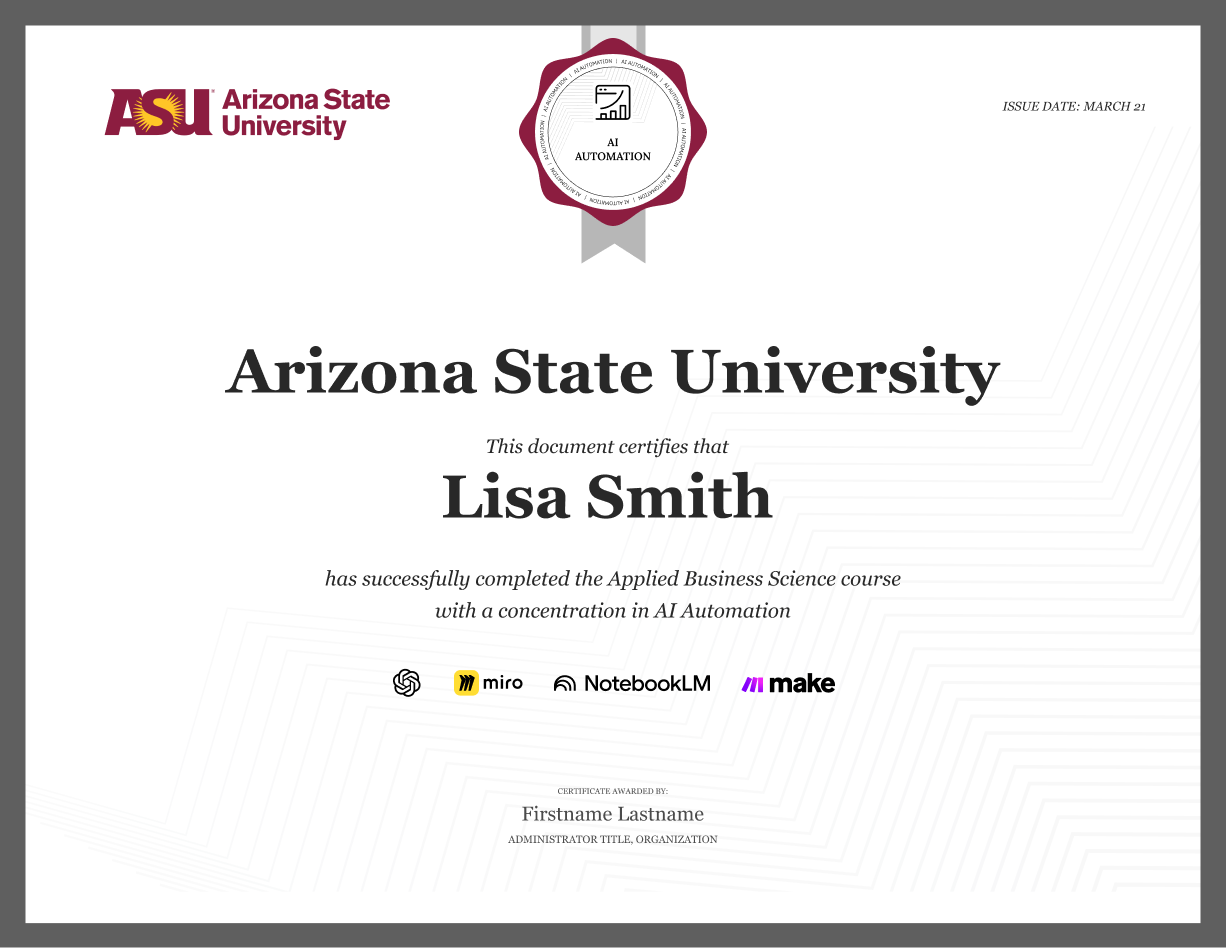
AI Leaders Council has partnered with Ziplines and Arizona State University to offer two AI certifications designed for real business application. These programs are built for professionals who want to move beyond experimentation and begin using AI in a structured, repeatable way across their work. Whether your focus is improving productivity, streamlining processes, or building scalable workflows, these certifications provide practical skills you can apply immediately.
Why It Matters
- Employee trust is becoming an important factor in whether organizations can give AI agents meaningful responsibility.
- Companies need to understand and redesign business processes before automating them with increasingly autonomous systems.
- AI agents introduce a new identity challenge because they can access sensitive data and applications much like employees.
- Cybersecurity strategies must account for agents as both potential attack vectors and potential targets.
- Early productivity gains are becoming measurable, but organizations must update management practices, governance, and workforce strategies to sustain those gains.
Stay Ahead with the AI Insiders Newsletter
Join more than 55,000 AI executives and innovators for exclusive insights, strategies, and trends shaping the future of AI leadership. Subscribe to the AI Insiders Newsletter.